
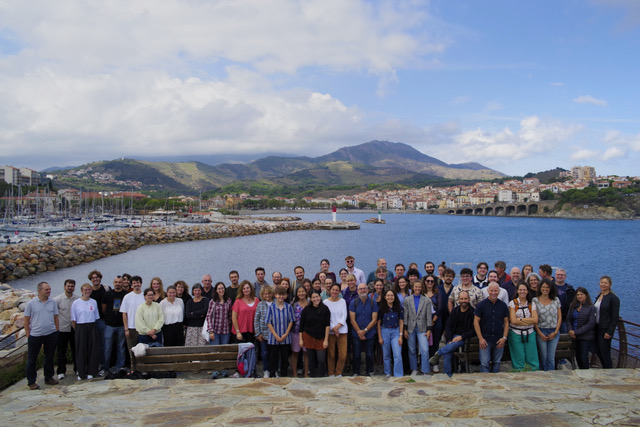
On October 5–6, 2026, the Institut de Ciències del Mar (ICM-CSIC) and the Observatoire Océanologique de Banyuls-sur-Mer (OOB) convened for their 8th biennial meeting, focused on marine microbes.
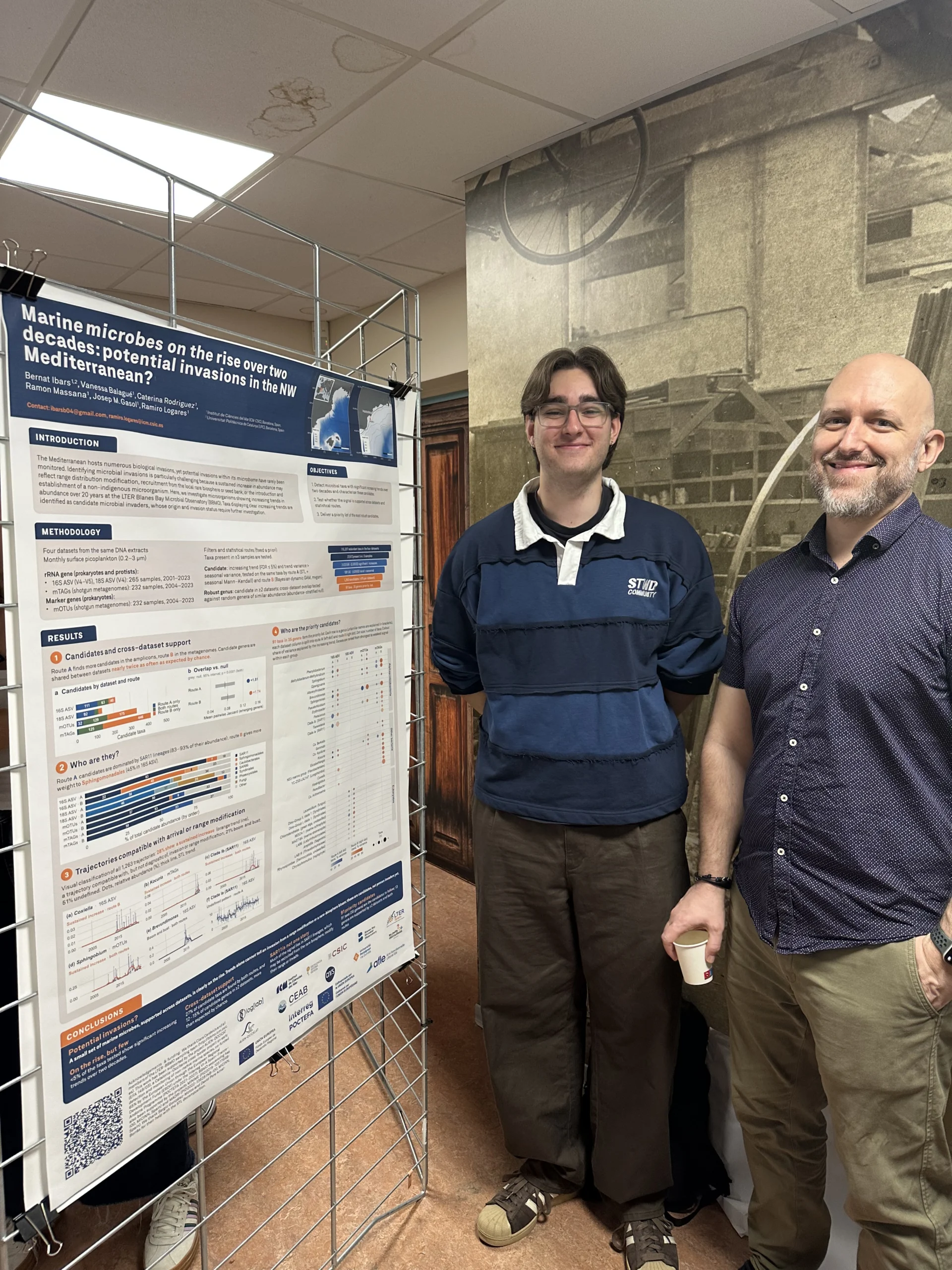
During the event, Bernat Ibars, a bachelor’s thesis student at ICM-CSIC under the supervision of Ramiro Logares, presented his research titled:
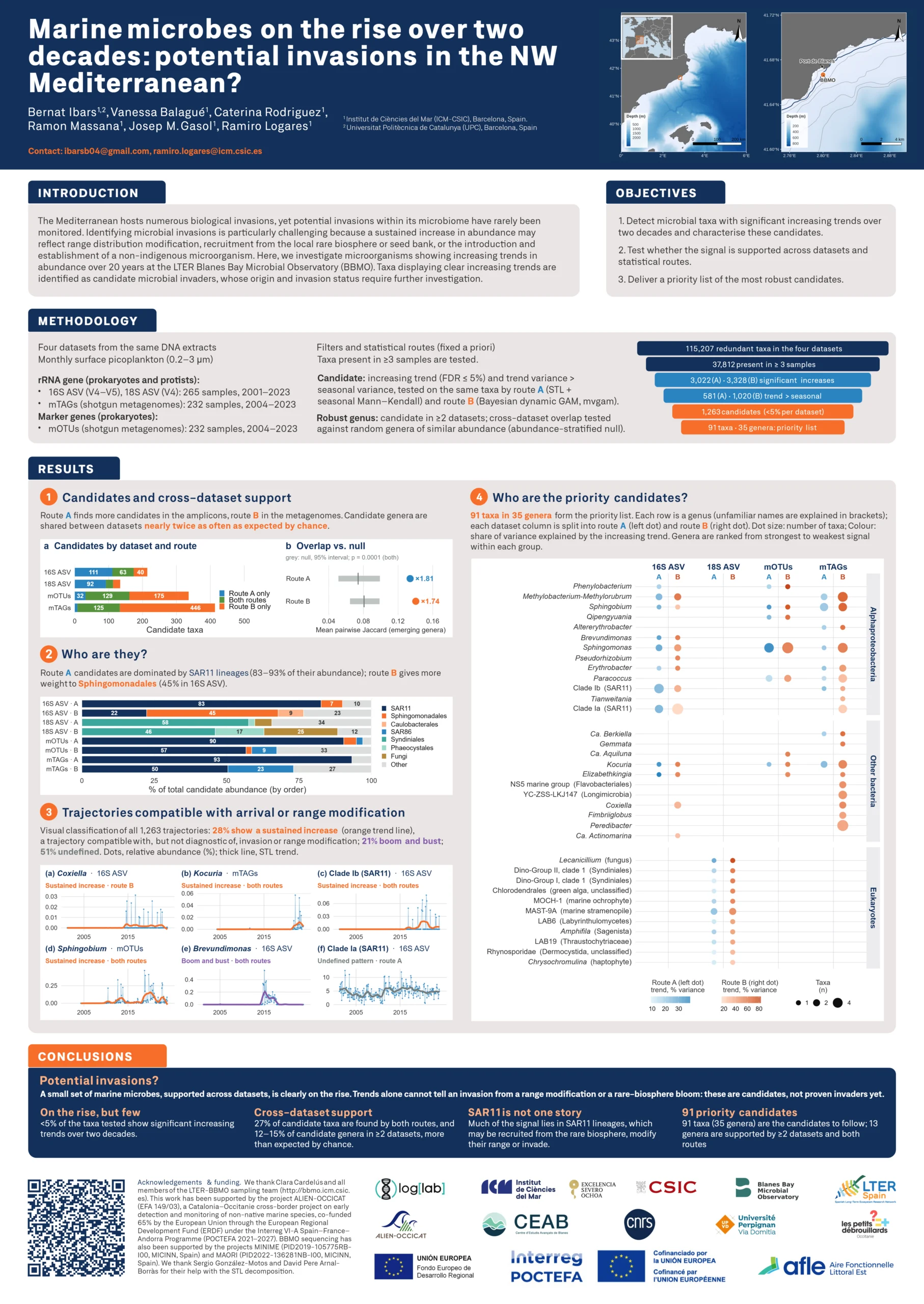
« Marine microbes on the rise over two decades: potential expansions in the NW Mediterranean? »
Rising species, but uncertain origins
While the introduction of non-indigenous species in the Mediterranean is well-documented for fauna and flora, the long-term dynamics of microbial populations remain poorly understood. Indeed, determining whether a microbe is truly non-indigenous is challenging, as its original range is often difficult to define with certainty.
Using 20 years of data from the Blanes Bay Microbial Observatory (BBMO), this study aims to identify microorganisms whose abundance is increasing significantly.
Key findings:
- Less than 5% of the analyzed taxa show a significant increase over 20 years.
- The analysis identified 91 taxa (across 35 genera) for close monitoring. Among them, 13 genera are confirmed by multiple datasets and statistical methods.
- A large portion of the increasing signals comes from the SAR11 lineage.
- An increase in abundance does not necessarily mean a non-indigenous species: it may also reflect a shift in geographic distribution, recruitment from the local rare biosphere, or the detection of previously undetectable species.
A small group of marine microbes is clearly expanding in the Northwestern Mediterranean. These organisms are now a priority for future research, to better understand whether these increases represent the arrival of new species or broader ecological responses.