
Yolanda Lucas¹, Miguel A. Meca¹, Paola Mura¹, João Gil², Sébastien Thorin³ &; Daniel Martin¹
¹ Centre d’Estudis Avançats de Blanes (CEAB-CSIC)
² Centre of Marine Sciences, CCMAR
³ Creocean
Invasive alien species are one of the main threats to global biodiversity. According to the definition in Spanish Law 42/2007 of December 13 on Natural Heritage and Biodiversity (Article 3), an invasive species is a species “introduced or established in a natural or semi-natural ecosystem or habitat that acts as a factor of change and a threat to native biological diversity, either through its invasive behavior or the risk of genetic contamination.” Their expansion can alter ecosystem functioning, displace native species, and generate significant ecological and economic impacts.
The Mediterranean Sea is one of the marine regions most affected by biological invasions (Coll et al. 2010; Zenetos et al. 2022). Among the main vectors responsible for the introduction and spread of species are maritime transport, aquaculture, warming waters associated with climate change, and the connection with the Red Sea via the Suez Canal (Zenetos & Galanidi, 2020; Tiralongo et al., 2022). Consequently, the number of non-indigenous species recorded in this basin has steadily increased over the past decades (Zenetos et al. 2022).
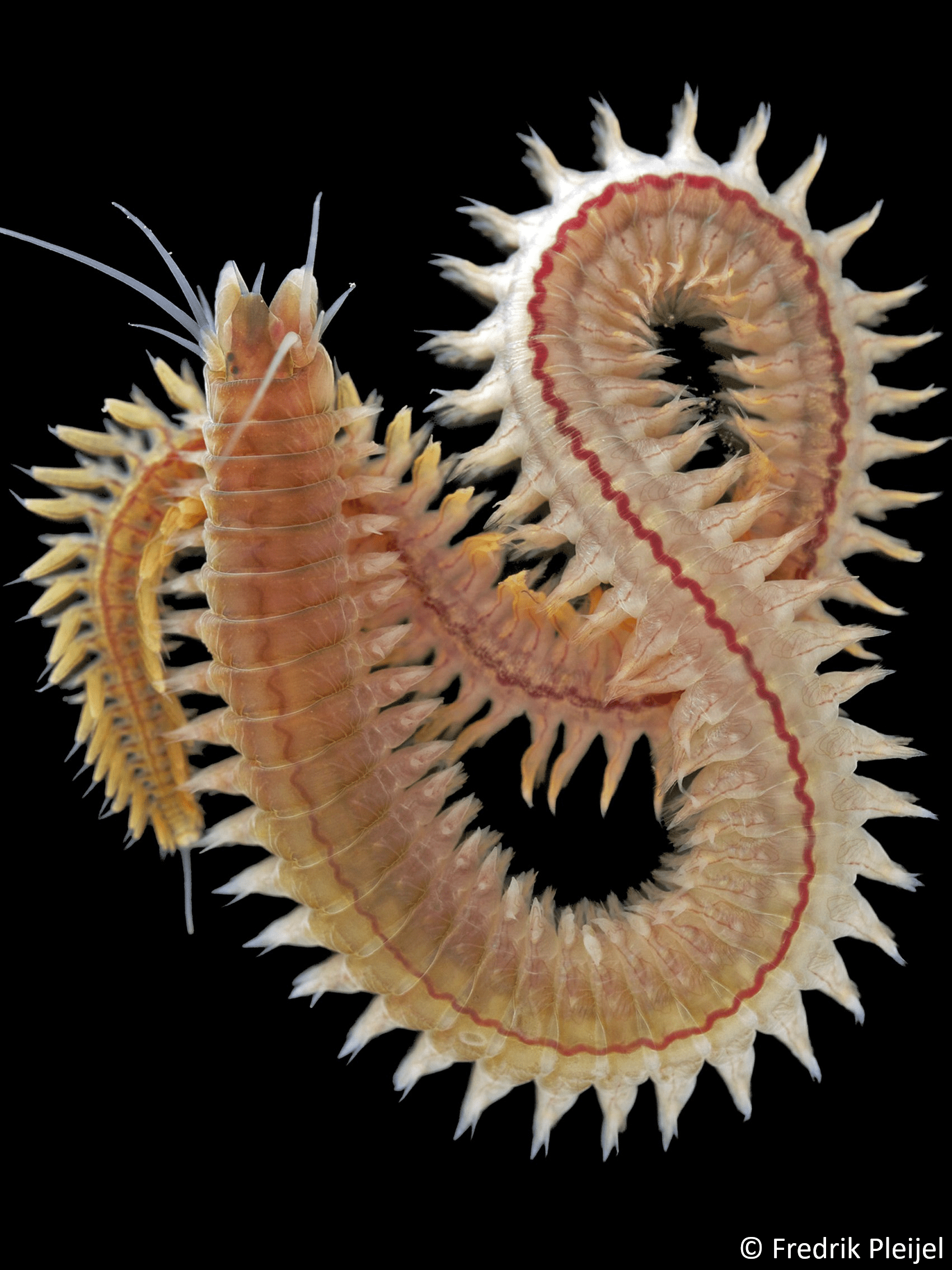
In this context, the polychaete annelid Alitta succinea (Leuckart, 1847) (Fig. 1A–B), belonging to the Nereididae family, represents a particularly interesting case.
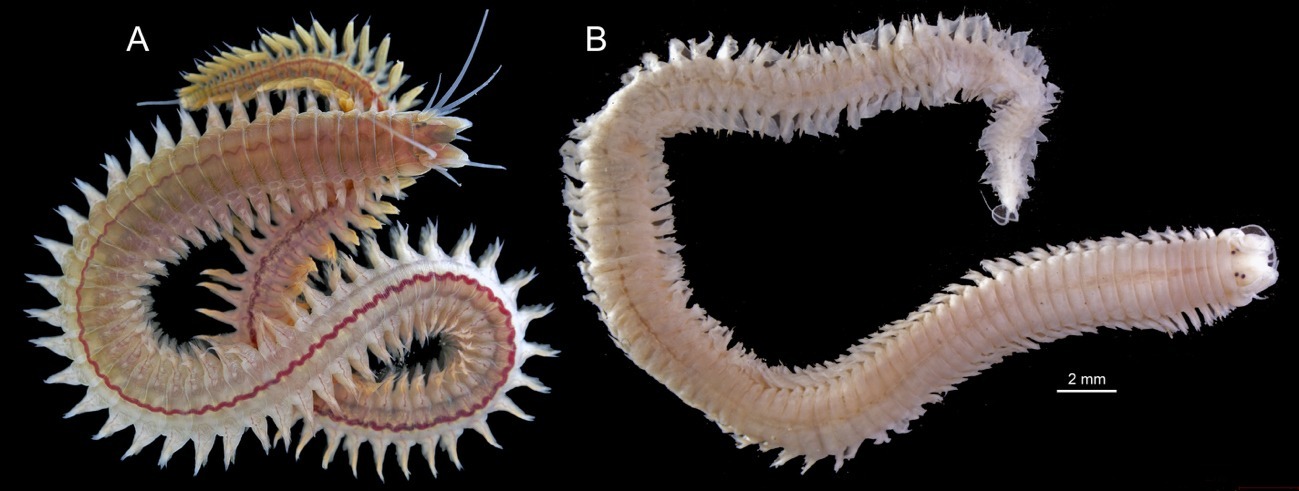
Figure 1. Specimens of Alitta succinea photographed alive (A) and preserved (B).
It is a typically estuarine species, characterized by a high tolerance to salinity variations, enabling it to colonize environments subject to significant environmental fluctuations (Mucciolo et al., 2021). However, beyond its ecological plasticity, A. succinea stands out due to the complexity of its biogeographical history and an exceptionally wide geographical distribution.
Although it was originally described in Helgoland (Germany, North Sea), its native range remains debated. It has been suggested that it may be native to the Atlantic coast of North America, where it has a wide distribution (Sato, 2013). However, the presence of the species in many regions of the world, including North and South America, Hawaii, China, South Africa, Australia, Greece, and Italy, has raised questions about whether all these populations truly belong to a single species.
Indeed, it has been demonstrated that some populations attributed to “A. succinea” actually conceal a complex of cryptic species, leading to the rehabilitation of previously synonymous taxa, such as Alitta acutifolia Ehlers, 1901 (Villalobos-Guerrero & Carrera-Parra, 2015). Similarly, new species have been described, such as Alitta yarae Álvarez, Desiderato & Mucciolo, 2023 in Brazil. Despite this taxonomic complexity, A. succinea has also frequently been reported as an accidentally introduced species with high invasive potential (Ferreira et al., 2024). In some cases, its introduction has even been deliberate, as in the Aral, Caspian, and Black Seas, where it was released as a food resource to support regional commercial fisheries (Proskurina, 1980; Glasby & Timm, 2008; Gillet et al., 2011; Ghasemi et al., 2013; Băncilă et al., 2023). These introductions have since contributed to the species’ expansion and represent one of the best-known examples of human-assisted dispersal in this group of organisms.
The ALIEN-OCCICAT project aims to assess the presence and temporal evolution of A. succinea in various coastal water bodies of the northwestern Mediterranean. To do so, it relies on data generated by multiple time series spanning over three decades of sampling. These include studies conducted in the lagoons and coastal systems of southern France as part of the collaboration between CEAB and the company Creocean, as well as ecological monitoring programs carried out by CEAB for the Catalan Water Agency (Agència Catalana de l’Aigua) along the entire Catalan coastline.
To date, the analyzed data have detected populations attributed to A. succinea in many water bodies along the French Mediterranean coast, at least since the 1990s (Fig. 2, Table 1).
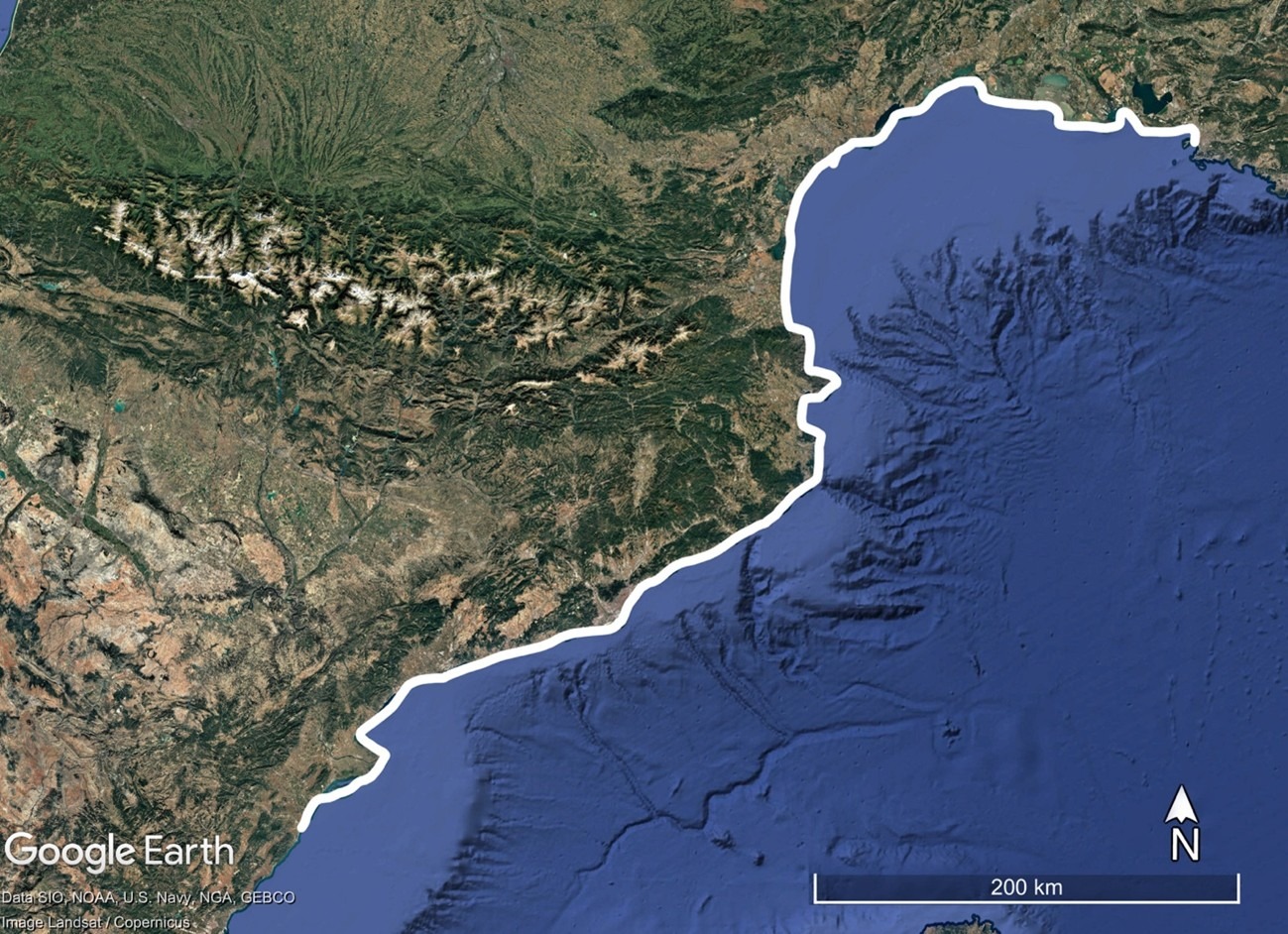
Figure 2. Study area on the Catalan-French coasts of the northwestern Mediterranean.
Table 1. Time period covered and averages of the maximum number of individuals of Alitta succinea and Hediste sinesimplex observed in the different water bodies studied in the French Mediterranean.
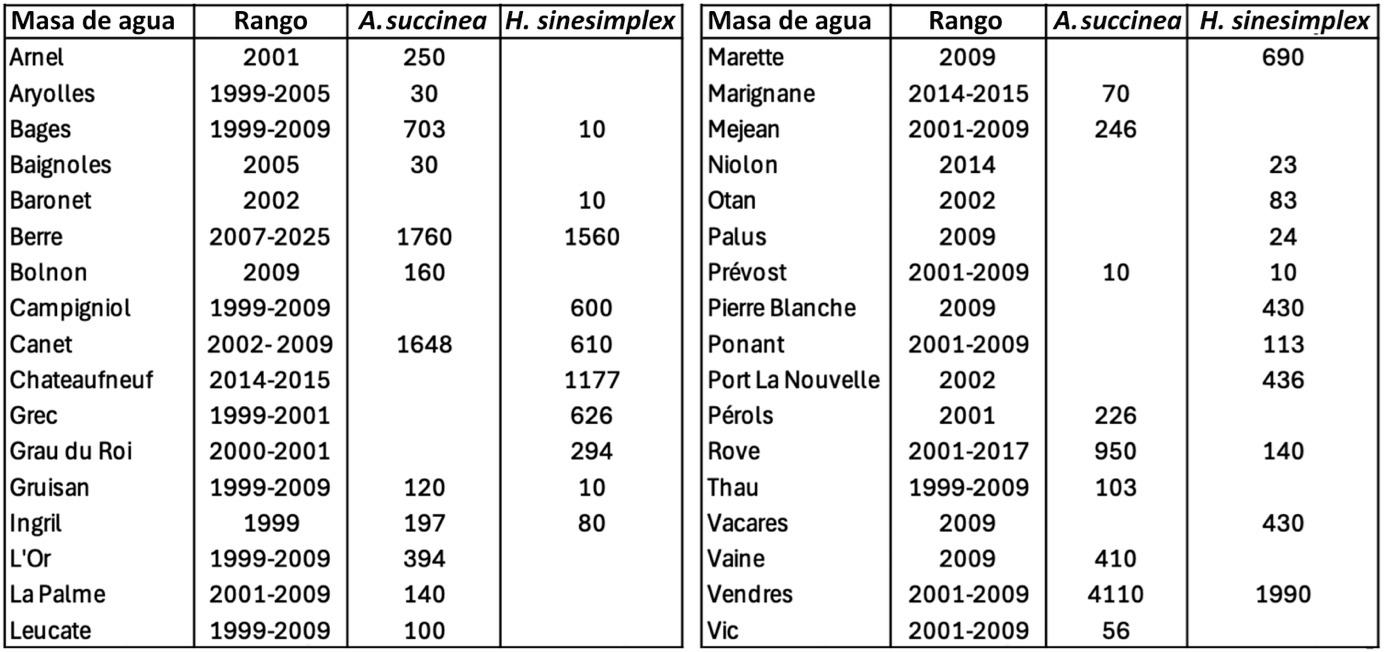
These observations, combined with populations already documented in the Adriatic Sea and the Saronic Gulf (Abbiati & Maltagliati, 1992; Mucciolo et al., 2021; Langeneck et al., 2023), suggest that A. succinea may currently be established in different sectors of the Mediterranean Sea and could be part of its allochthonous fauna.
However, the persistent uncertainties regarding its biogeographical origin call for caution. Following the proposal of Langeneck et al. (2023), we consider the most appropriate status for the current situation of A. succinea in the Mediterranean to be that of a cryptogenic species (sensu Carlton, 1992), meaning a species whose origin, whether native or introduced, cannot be determined with certainty. One of the main objectives of ALIEN-OCCICAT is precisely to compare, both morphologically and molecularly, the Mediterranean and Atlantic populations to determine whether they truly correspond to the same biological entity, as has already been demonstrated for Greek populations (Langeneck et al., 2023).
In contrast, studies conducted so far on the Catalan coasts of the Iberian Peninsula have not detected the presence of A. succinea in any of the sampled localities, including after confirming its absence in the Ebro Delta through environmental DNA analysis (Xavier Turon, pers. comm.). This suggests that the species may not yet have reached this sector of the Western Mediterranean.
In several of the French coastal lagoons studied, A. succinea is even the only nereidid present. In other localities, it coexists with the native species Hediste sinesimplex Costa, Rocha, Martins, Venâncio, Ureña, Almeida, Ferreira, Christoffersen & Antunes, 2025 (previously identified as H. diversicolor O.F. Müller, 1776). The observed patterns suggest a possible competitive interaction between the two species, as when one reaches high densities, the other generally shows low abundances or even disappears locally. This phenomenon is particularly evident in certain sectors of the Berre Lagoon near the La Mède industrial zone, where temporal monitoring has been more intensive (Fig. 3).
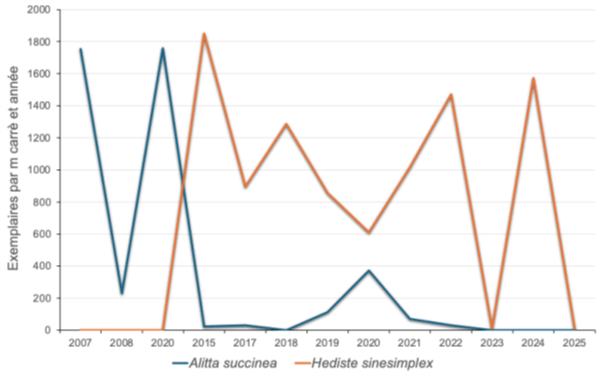
Figure 3. Temporal monitoring of Alitta succinea and Hediste sinesimplex populations in the Berre Lagoon (northwestern Mediterranean, France). The data shown correspond to the annual averages of the maximum densities observed in the sampled stations.
The distribution of polychaetes in coastal lagoons is strongly conditioned by environmental variables such as salinity, sediment grain size, organic matter content, and vegetation cover, which can influence both community composition and the presence or absence of certain species (Dávila-Jiménez et al., 2019; Hernández-Alcántara et al., 2018). Thus, the joint analysis of the physicochemical variables of the more than forty water bodies included in this study will help assess the influence of these factors on the distribution and relative abundance of A. succinea and H. sinesimplex.
Overall, the results obtained by ALIEN-OCCICAT will contribute to improving knowledge of the ecology, distribution, and biogeographical status of A. succinea in the Western Mediterranean, as well as its relationships with H. sinesimplex populations. They will also help better understand the mechanisms favoring the expansion of potentially invasive species in particularly vulnerable coastal ecosystems and assess their potential effects on native species populations.